 California Real Estate Lawyers Blog


 With rates at an all time low, many in California are rushing to refinance their real property mortgage loans. Often, borrowers are not aware that they may expose themselves to personal liability if they refinance the loan they originally used to buy their residence.
California has a number of statutes that protect borrowers from personal liability (deficiency judgments) for the loan balance remaining after a foreclosure trustee’s sale. If the property is the borrower’s home, there is protection for the loan used to buy the property. Recent legislation provides for protection in a short sale. Also, if the lender who made the original purchase money loan refinanced the loan, there is protection. With enactment of SB 1069, beginning January 1, 2013, ANY lender who provides a refinance of the purchase money loan will also be prevented from obtaining a deficiency judgment against the borrower. Each borrower’s situation is different, and anyone in a default situation should consult an experienced Sacramento real estate lawyer to determine their risk of personal liability.
 The change makes sense in light of the historic purpose of Civil Procedure section 580b. In the event of a depression of land values, it is to prevent aggravating the downturn that would result if defaulting purchasers lost the land plus had personal liability. It is based on the premise that the lender is in the best position to determine the true value of the security for its loan, which is the property. If the lender overvalues the property, the lender should bear the risk of not obtaining the balance of the loan value in a foreclosure sale.
 The Mortgage Debt Forgiveness Act requires that the debt was incurred to buy or substantially improve the taxpayer’s principal residence. This includes a refinance loan, to the extent that the principal balance of the old mortgage would have qualified. Up to $2 million of forgiven debt is eligible for this exclusion ($1 million if married filing separately). The amount of debt forgiven must be reported on your tax return. The act first extended such relief for three years, applying to debts discharged in calendar year 2007 through 2009; with the Emergency Economic Stabilization Act of 2008, this tax relief was extended another three years, covering debts discharged through calendar year 2012.
 The forgiven debt may also be excluded from your income if:
 In
In  In
In  In
In  The Association filed a petition, and the court set a hearing date. The judge required homeowners are to be given notice by mail Friday August 13, 2010, and any written opposition from homeowners be filed by the following Tuesday, August 17, only four days later. Usually in legal proceedings, five days are added for mailing. If ,on January 1, I mail to you a motion, it is not deemed received by you until January 5. (Civil Code section 1013) But that was not considered in this case.
 In
In 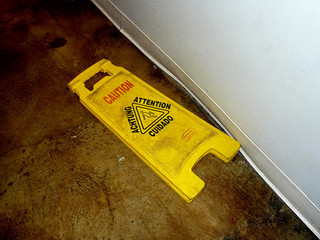 In
In The trial court ruled on summary judgment for the defendant jewelry store, finding that the plaintiff had established that the store owner had actual or constructive notice of a dangerous condition. The court of appeals disagreed. It noted that this was not a ordinary slip and fall- the answer turns on whether the dangerous condition was created by the negligence of an employee of the store. Such cases are governed by the doctrine of respondeat superior- the employer answers for the actions of employees, and is presumed to have notice of what the employees know. Here, the evidence shows that a reasonable inference can be drawn that the condition was created by employees of the defendant, and that the defendant is then held to know what the employee knows about the dangerous condition. If the employee was acting within the scope of their employment (doing their job) the owner cannot claim that he had no notice of the dangerous condition.
  It is a general rule in California law that a lawsuit to set aside a trustee’s sale for irregularities in sale notice or procedure should be accompanied by