 California Real Estate Lawyers Blog


The economic crisis and the subsequent foreclosures resulted in the California legislature enacting a number of laws to assist homeowners and tenants of houses in trouble. One such law, Civil Code section 2923.5, requires that the foreclosing party must first contact the borrower, assess their financial condition, and explore options for the borrower to avoid foreclosure. A California court recently ruled that borrower can allege failure to follow the requirement gives the borrower the right to make a claim in court.
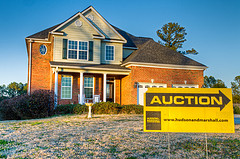 The borrower in Skov v. U.S. Bank National Association borrowed $1.5 million in 2003, secured by her residential property in Saratoga. She stopped making payments, and a Notice of default was recorded in June 2009. (This is not the usual case, housing price inflation was not rampant in 2003) Skov filed suit; it is not clear from the opinion, but looks like suit was filed before the foreclosure sale (good move) and Skov probably got a preliminary injunction.
One of the plaintiff’s claims was that U.S. Bank did not follow the requirements of Civil Code section 2923.5. It was claimed that U. S. Bank never contacted Skov before recording the notice of default. She hired attorneys who telephoned and sent letters to U.S. Bank which were unanswered. U.S. Bank failed to evaluate her finances or explore options to avoid foreclosure. U.S. Bank did not contact her until a month after it recorded the Notice of default.
 In
In  In
In  In
In  The purchase contract required arbitration, so the court ordered the case to arbitration. The arbitration resulted in an arbitration award of more than $1.6 million to the plaintiff. The arbitration award, however, was not against the trustees, but against the trust itself, and the partnership. The arbitrator found that the trustees “are not personally liable for their acts as trustees.” Anyone in such a situation should consult an experienced
 In
In  Title companies often prepare complicated documents, such as deeds of trust, grant deeds, an promissory notes to accommodate closing escrows, which results in their fees. There can be mistakes that vary in seriousness, and sometimes the only solution is to have the Court order a document re-formed. A recent decision points out the problems that can arise when a property was sold for $7.2 million dollars, and the seller did not have an
  It was in
  The question arose because of a statute of limitations – the deadline a party has to file a lawsuit before their rights are timed out. In
 In
In